The Ultimate Frontier

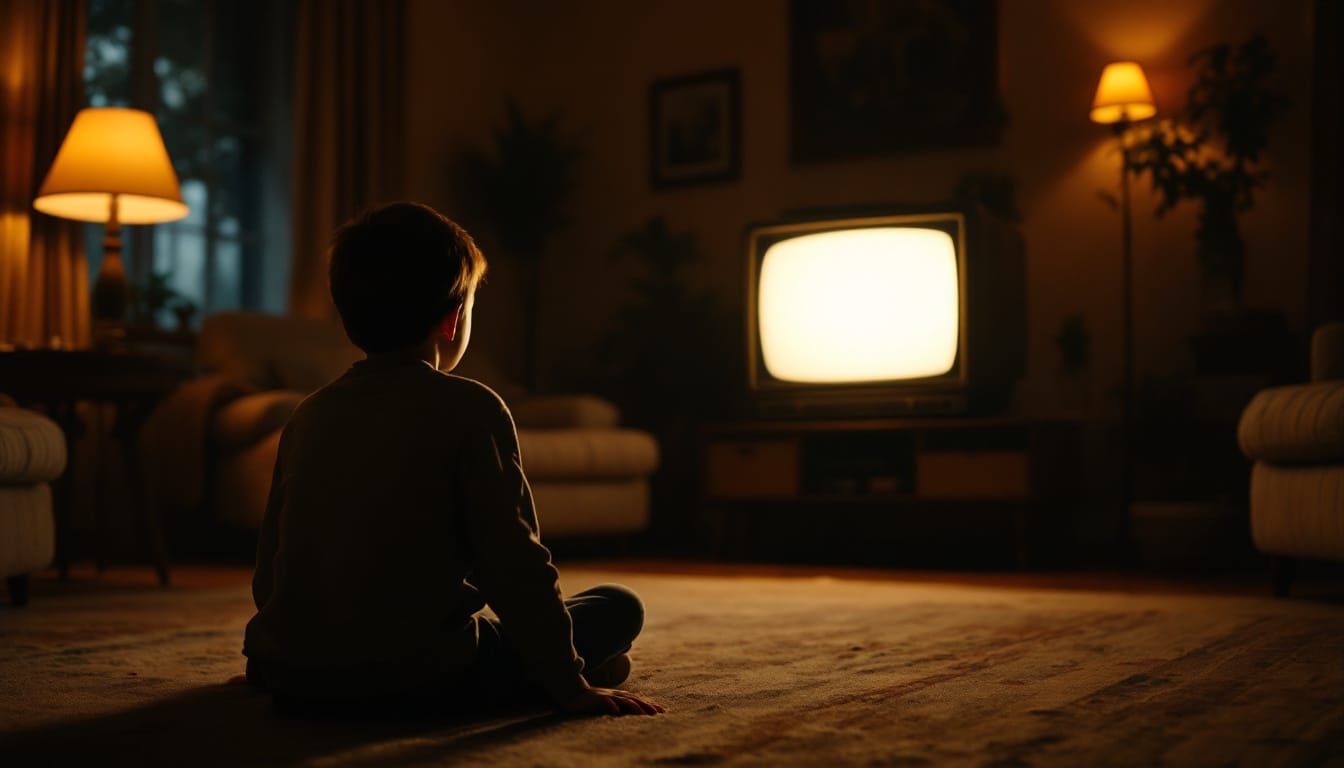
I was born the same year as Bill Gates and Steve Jobs. Except they were born in the United States, and I was born in Venezuela. For a long time I believed that made a real difference between us. Looking back now, I think I was mistaken. Geeks have no borders. They never did. What we shared, all of us from that generation, regardless of country, was the same sky observing us from above, and the same event marking us on the inside at precisely the same moment.
Because if there is a summa cum laude of being a geek in my generation, it belongs, without any real competition, to the space program.
"Space. The final frontier." Spoken in that particular cadence, it was almost an opening prayer for us. Star Trek taught us the vocabulary before we even fully comprehended the physics behind it. "Go ahead, Mr. Sulu." That single phrase was sufficient to place us on the bridge, sufficient to make us feel part of a crew that didn't even exist.
And while fiction was teaching us the language, reality delivered the event itself. The moon landing was not a newspaper headline for us. It was a complete sensory experience — the rockets, the service modules, the lunar modules, every component with its own technical name, which we repeated with a pride I still find difficult to explain to anyone who did not live it. And the astronauts — "the right stuff," as they said — were not celebrities to us. They were something closer to demigods wearing helmets.
Baseball was finished. Football was finished. To hell with batting averages and touchdown statistics — we had our own statistics, our own metrics, and those were the ones that truly mattered: trajectory, reentry velocity, the supersonic impact against the atmosphere. A child of my generation might not have known his favorite player's batting average, but he knew precisely at what angle a capsule had to reenter the atmosphere to avoid disintegrating.
And in the living room of my house, I was the unofficial mission control. Every launch, every maneuver, I explained to my family as if we were seated in Houston instead of Venezuela. Nobody requested it. I simply could not contain myself. We devoured Walter Cronkite's coverage — his numbers, his updates, that voice that managed to make you feel the gravity of the moment without ever raising itself.
And then came Apollo 13. We did not merely watch it. We suffered it. As if we ourselves were on board, breathing that same increasingly scarce air, calculating alongside them whether the improvised heat shield would hold. And when those phrases finally arrived — "chute open," "splashdown nominal" — the relief was not that of a spectator. It was the relief of someone who felt he had returned with them.
Even now, when I hear those words, something inside me stands up.
And thinking about it now, perhaps that is exactly why geeks have no borders. Because while in the United States a boy named Bill was assembling his first circuit boards, and another named Steve was dreaming of reinventing something that did not yet exist, here, in Venezuela, another boy of the same age was in his living room, his gaze fixed on a landing module, calculating alongside Houston whether the world was about to witness something impossible.
Different countries. Different languages. The same sky. And I suspect that was, without anyone planning it, our first real lesson that knowledge — and the fascination with knowledge — never required a passport.
And always — stay focused, stay curious. I'm The Senior Geek.
Dr. Jose A. Cisneros, MD, Ph.D · seniorgeek.net
Hashtags: #Space #Apollo #StarTrek #GeekGeneration #SeniorGeek
SEO keywords: space program, Apollo 13, geeks, Star Trek, born same year as Bill Gates, technology after 60